Sticking locks, loose hardware, misaligned latches, and worn cylinders repaired across the Atlanta area.
Many lock problems are repairs, not replacements. Doors that stick, handles that sag, latches that miss the strike, and cylinders that grind can often be corrected without new hardware.
The technician checks the lock, the latch and strike alignment, the door's fit in the frame, and the condition of the cylinder and springs, then explains whether an adjustment, a part swap, or a full replacement is the right call.
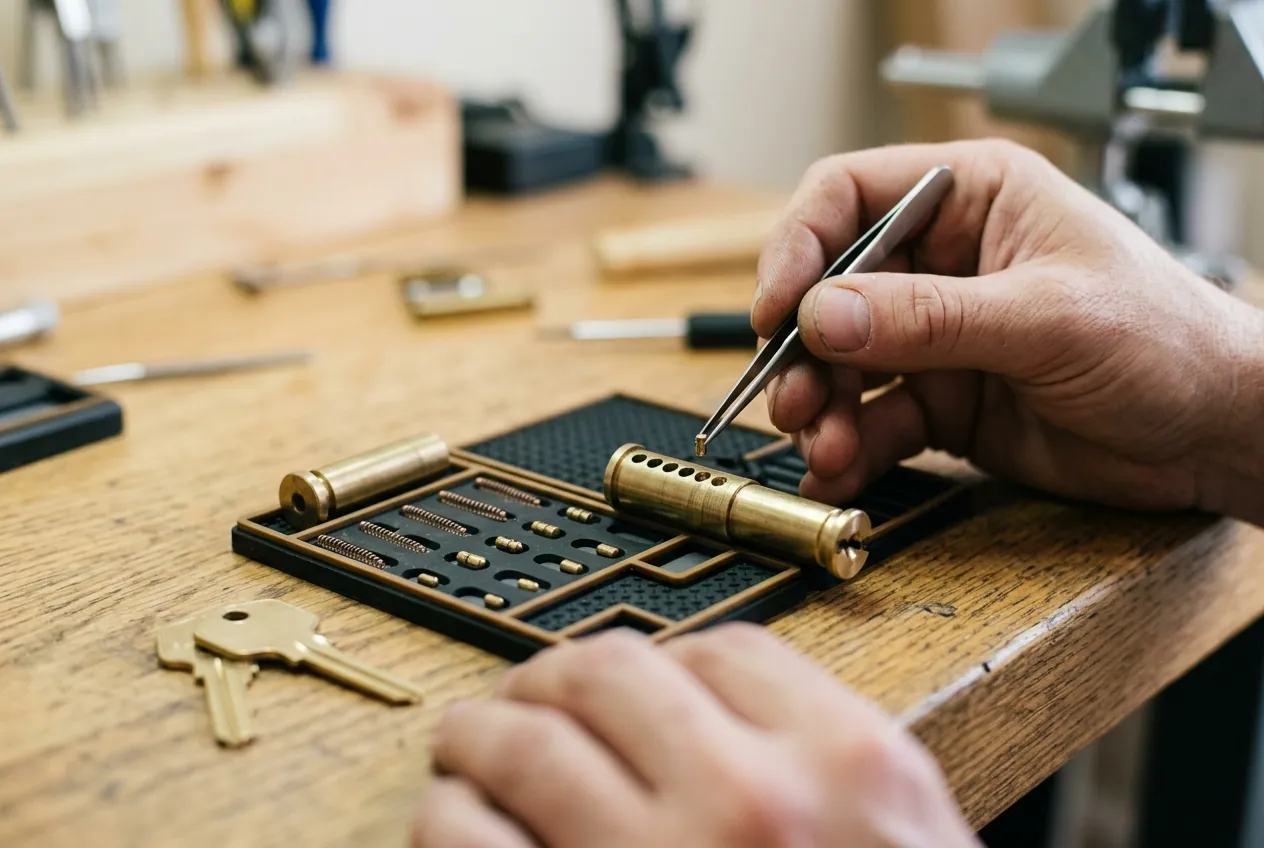
Most repair calls fall into a small set of recognizable patterns:
Reach our team at (866) 472-3979 and describe the lock, door, or vehicle and what is happening.
Give your address or location so we can send a locksmith working that part of the metro.
Before any work starts, the technician looks at the lock or vehicle and explains what the job involves.
Once you are clear on the scope, the technician carries out the lockout, rekey, repair, or installation.
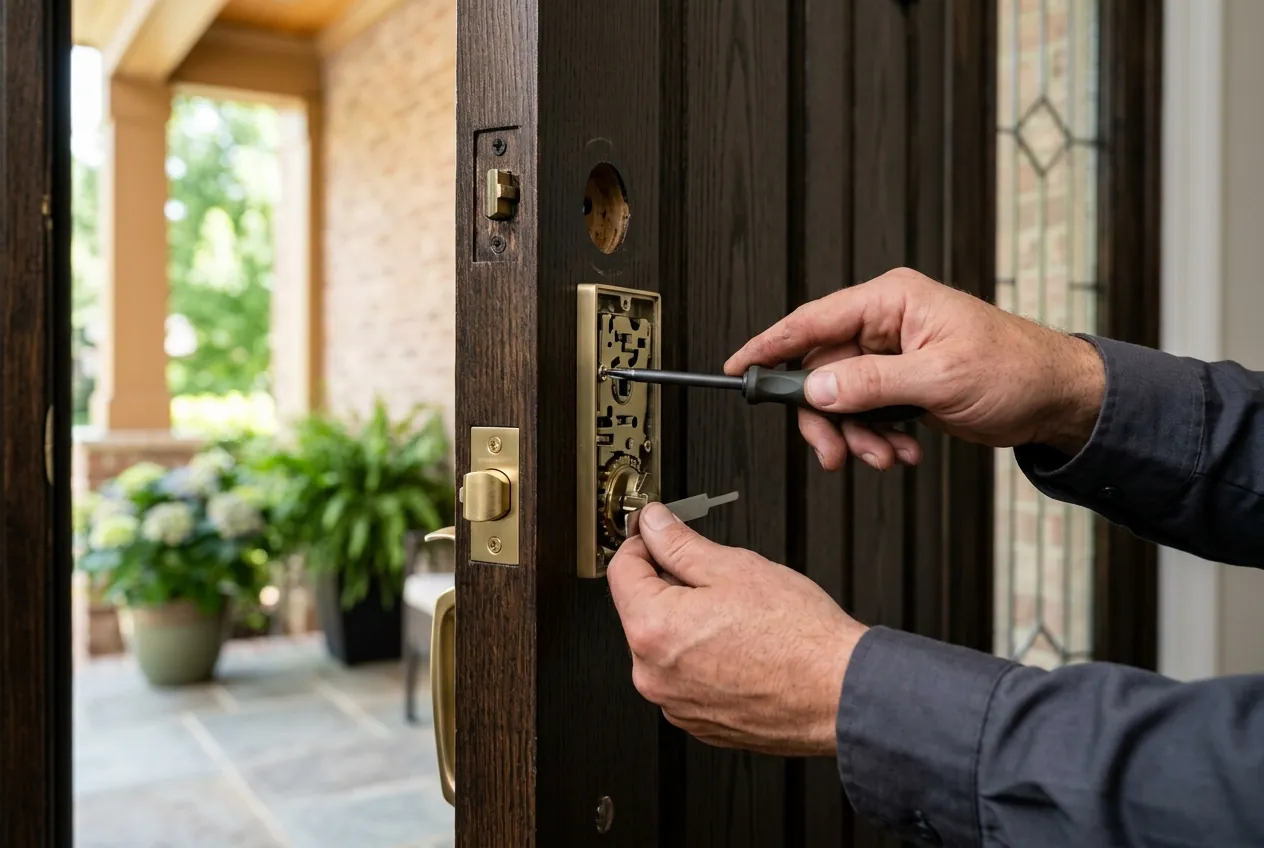
The technician's first question on most repair calls is whether the underlying issue is the lock hardware itself or how the door sits in its frame, since those two things get confused for each other constantly.
Cylinder-level repairs, such as cleaning, lubricating, or replacing worn pins and springs, are usually quick and keep your existing keys working. Strike and hinge adjustments address alignment without touching the lock at all.
Replacement becomes the recommendation when a lock's internal parts are too worn to service reliably, or when the specific model is old enough that compatible parts are difficult to source.
Expand any of the sections below for the detail behind a visit.
Georgia's humidity swings between a wet spring and a dry winter cause wood doors and frames to expand and contract measurably over the year, which is the single most common reason a lock that worked fine months ago now feels off. Older homes in neighborhoods with original wood doors, common throughout Decatur, Virginia-Highland, and similar intown areas, tend to show this seasonal pattern more than newer construction with engineered doors and frames. A repair visit during a seasonal transition often turns out to be an adjustment rather than a parts replacement, which is worth knowing before assuming the worst about an older lock.
The technician's first test is whether the lock behaves differently with the door open versus closed. A lock that operates smoothly with the door open but binds when shut points to alignment rather than the mechanism. They then check hinge wear, strike position, latch projection, and how the cylinder turns, which separates a door problem from a hardware problem.
Note when the problem started and whether it varies with the weather, since seasonal patterns point strongly toward door and frame movement. Mention whether more than one door on the property is affected. If you know the lock's brand, that helps the technician bring likely replacement parts.
A few words that come up during this kind of visit, without the jargon.
Often, but not always. A simple adjustment or cylinder swap is usually less involved than replacing a full lockset. The technician gives you both options when a repair is borderline.
Usually not. That pattern points to the door or frame swelling with humidity and shifting the alignment. The fix is typically an adjustment to the strike or door rather than new hardware.
Sometimes. Mortise locks can often be rebuilt if parts are available. The technician assesses the mechanism and tells you whether a repair will hold.
A lock that works smoothly when the door is open but binds when closed usually points to door or frame alignment rather than the lock mechanism itself.
Minor stiffness can often wait for a convenient visit, but a latch or deadbolt that is not fully engaging is worth addressing sooner since it affects how securely the door closes.
Yes, when the repair is a cleaning, lubrication, or worn-parts service rather than a full replacement, your existing key continues to work.
Yes, interior door and closet hardware issues, such as a bedroom privacy lock or a sticking latch, are handled alongside exterior door repairs.
Frequently, yes. Cleaning and correctly lubricating a cylinder, or adjusting a strike plate, resolves a large share of complaints without replacing hardware.
That is a strong sign the door has dropped on its hinges or the frame has shifted, putting the bolt out of line with the strike. It is an adjustment rather than a lock fault.
Call and describe your situation and location, and one of our locksmiths serving your area will come out to you.