Rekeying existing locks and fitting new hardware for homes and businesses across the Atlanta area.
Rekeying and installation cover two related needs: changing which key operates an existing lock, and fitting new hardware where it is needed. Both are common after a move, a lost key, a tenant change, or a security upgrade.
Rekeying keeps the existing lock body and changes the pins inside so old keys no longer work. Installation replaces the hardware entirely, which makes sense when a lock is worn, outdated, or you want a different style or grade.
Beyond the obvious lost-key scenario, these situations are common reasons to rekey or reinstall rather than leave a lock as is:
Reach our team at (866) 472-3979 and describe the lock, door, or vehicle and what is happening.
Give your address or location so we can send a locksmith working that part of the metro.
Before any work starts, the technician looks at the lock or vehicle and explains what the job involves.
Once you are clear on the scope, the technician carries out the lockout, rekey, repair, or installation.
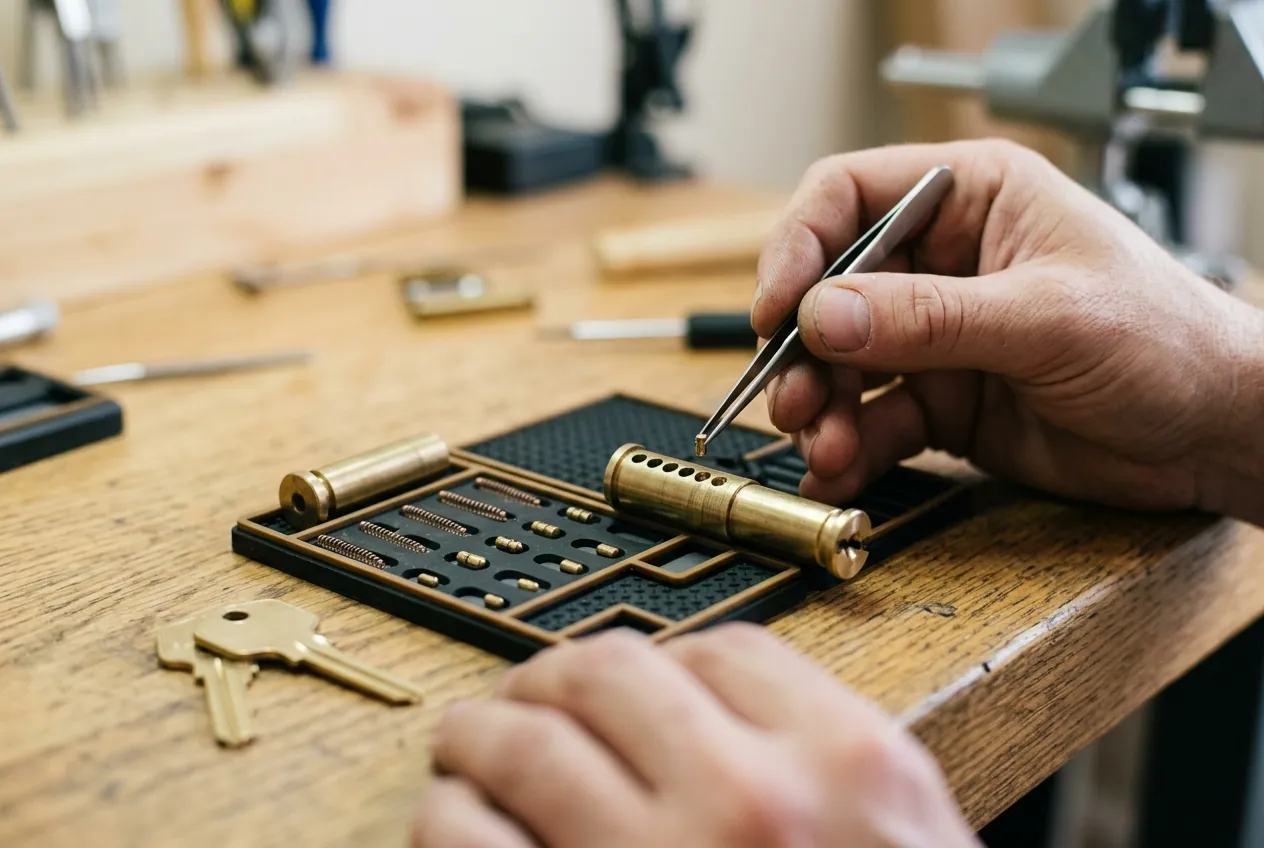
Rekeying is a mechanical process: the cylinder is opened, the existing pins are removed, and new pins matched to a new key are installed in their place. The lock body, the finish, and the exterior appearance stay the same.
Not every lock can be rekeyed. Very old or heavily worn cylinders sometimes lack the tolerance for a clean rekey, and some lower-cost hardware is not designed to be re-pinned at all, in which case replacement is the practical option.
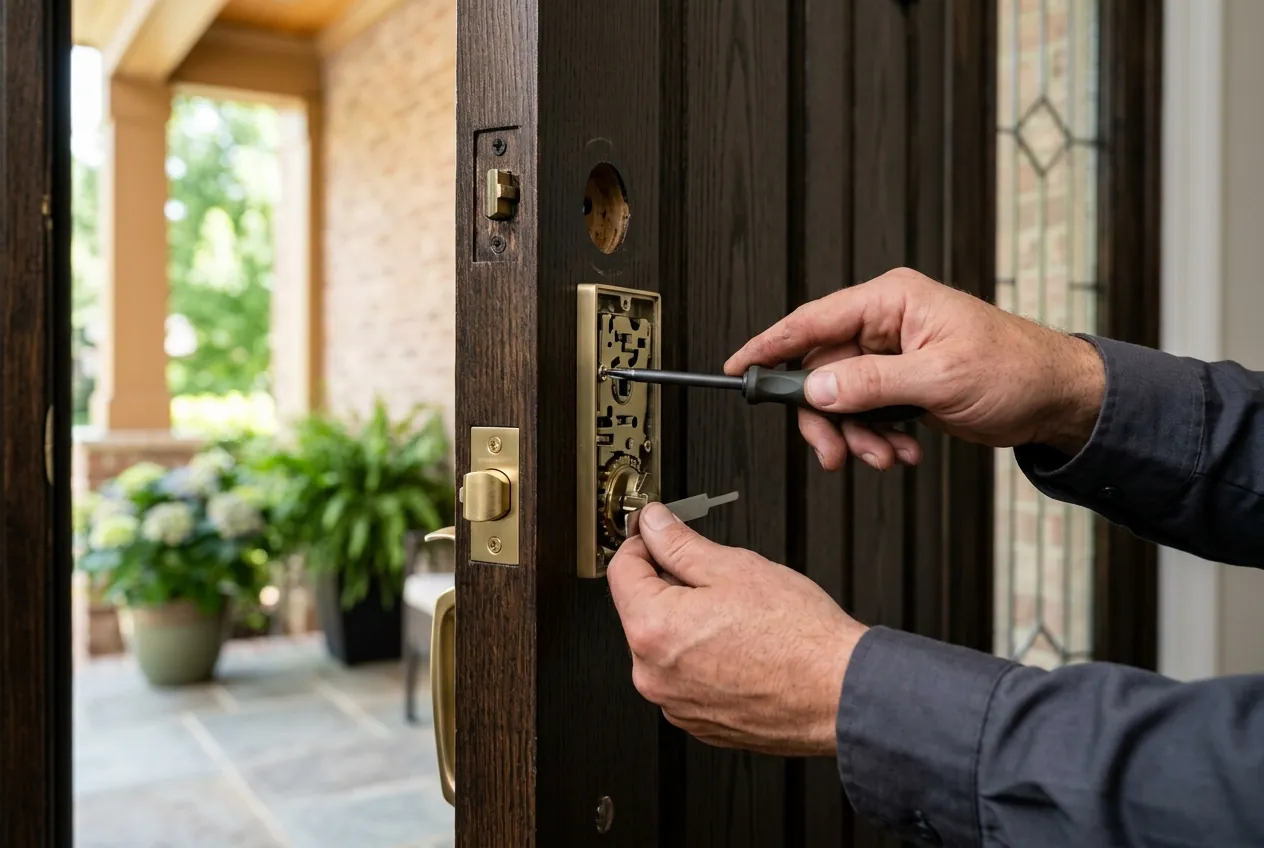
If you are installing new hardware rather than rekeying, the technician confirms the door prep, backset, and thickness match the new lock before cutting anything, since mismatched hardware is a common source of a poor-fitting install.
Expand any of the sections below for the detail behind a visit.
With a high volume of leasing turnover in apartment-heavy areas like Midtown, Buckhead, and the neighborhoods around Emory and Georgia Tech, rekeying between tenants is one of the more routine calls this service covers. Older homes throughout the metro sometimes carry mortise locks or discontinued cylinder brands where an exact rekey kit is not readily available; in those cases the technician explains whether a workaround exists or whether replacement is more practical. For homeowners associations and condo buildings that specify hardware standards, the technician can work within those requirements when rekeying or replacing locks on a unit door.
The technician checks each cylinder's brand, keyway, and condition to confirm it can take a clean rekey, since worn or very low-cost hardware sometimes cannot. For keying alike they verify the locks share a compatible keyway before committing to one key. On an installation they confirm door thickness, backset, and existing prep so new hardware seats correctly rather than being forced into a mismatched cutout.
Know how many doors you want covered and whether you want them all on one key. If you have any current keys, have them available so the technician can check compatibility. For an installation, decide roughly what finish you want if matching existing hardware matters to you.
A few words that come up during this kind of visit, without the jargon.
Rekey when the hardware is in good condition and you only need old keys to stop working. Replace when the lock is worn, outdated, or you want a higher grade or a different style. The technician can advise per door.
Usually, if the locks are the same brand and keyway or can be swapped to compatible cylinders. The technician confirms this on site before keying alike.
Some older or heavily worn locks cannot be reliably rekeyed and are better replaced. The technician checks the cylinder condition during the visit.
This varies by job; ask our team or technician about the number of keys included so there are no surprises.
The technician can look at your current hardware and tell you what would need to change if you decide to add a keypad or smart lock down the road.
Cluster mailbox locks are often controlled by the postal service or property management rather than the resident; ask our team whether this falls within scope for your situation.
Old keys simply stop working on the rekeyed lock; you do not need to return them, though you may want to discard them once you have confirmed the new keys work.
Only if they share a compatible keyway, or if cylinders are swapped so they do. The technician checks this on site before committing to a single key.
Many people do it in the first week, since it is difficult to know how many keys were issued to previous owners, agents, or contractors over the years.
Call and describe your situation and location, and one of our locksmiths serving your area will come out to you.