Lockouts, master keying, and door hardware for offices, storefronts, and managed properties across the Atlanta area.
Commercial calls cover lockouts, hardware repair and replacement, and keying work for businesses and property managers across the Atlanta area. Our team notes the business name, address, and who on site can authorize the work, and a technician meets an approved contact.
Commercial doors often use heavier hardware than homes, such as mortise locks, panic and exit devices, aluminum storefront locks, and closers. The technician assesses the existing hardware before recommending a repair or a like-for-like replacement.
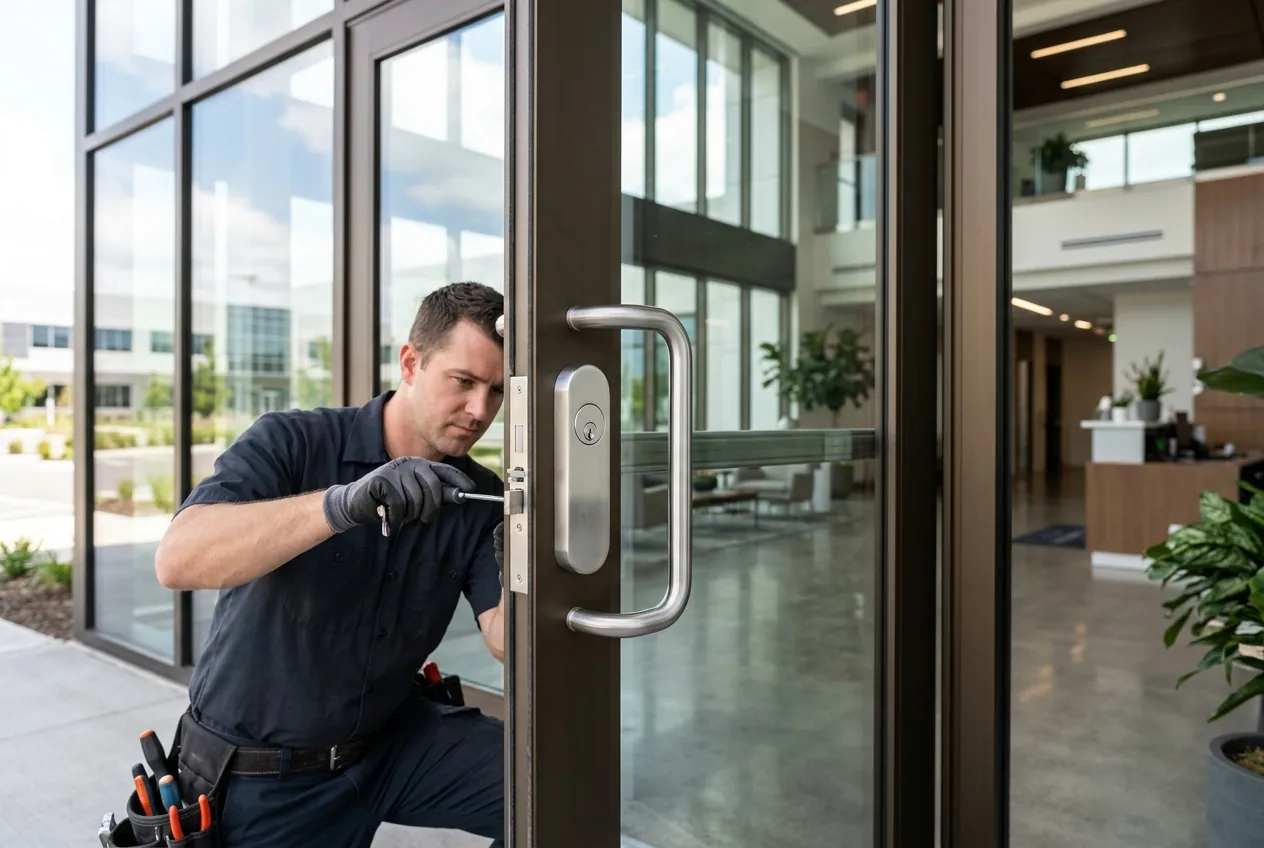
Commercial hardware tends to get heavier use than residential locks, and problems often show up gradually before they become a lockout. Businesses in the metro typically call for:
Reach our team at (866) 472-3979 and describe the lock, door, or vehicle and what is happening.
Give your address or location so we can send a locksmith working that part of the metro.
Before any work starts, the technician looks at the lock or vehicle and explains what the job involves.
Once you are clear on the scope, the technician carries out the lockout, rekey, repair, or installation.
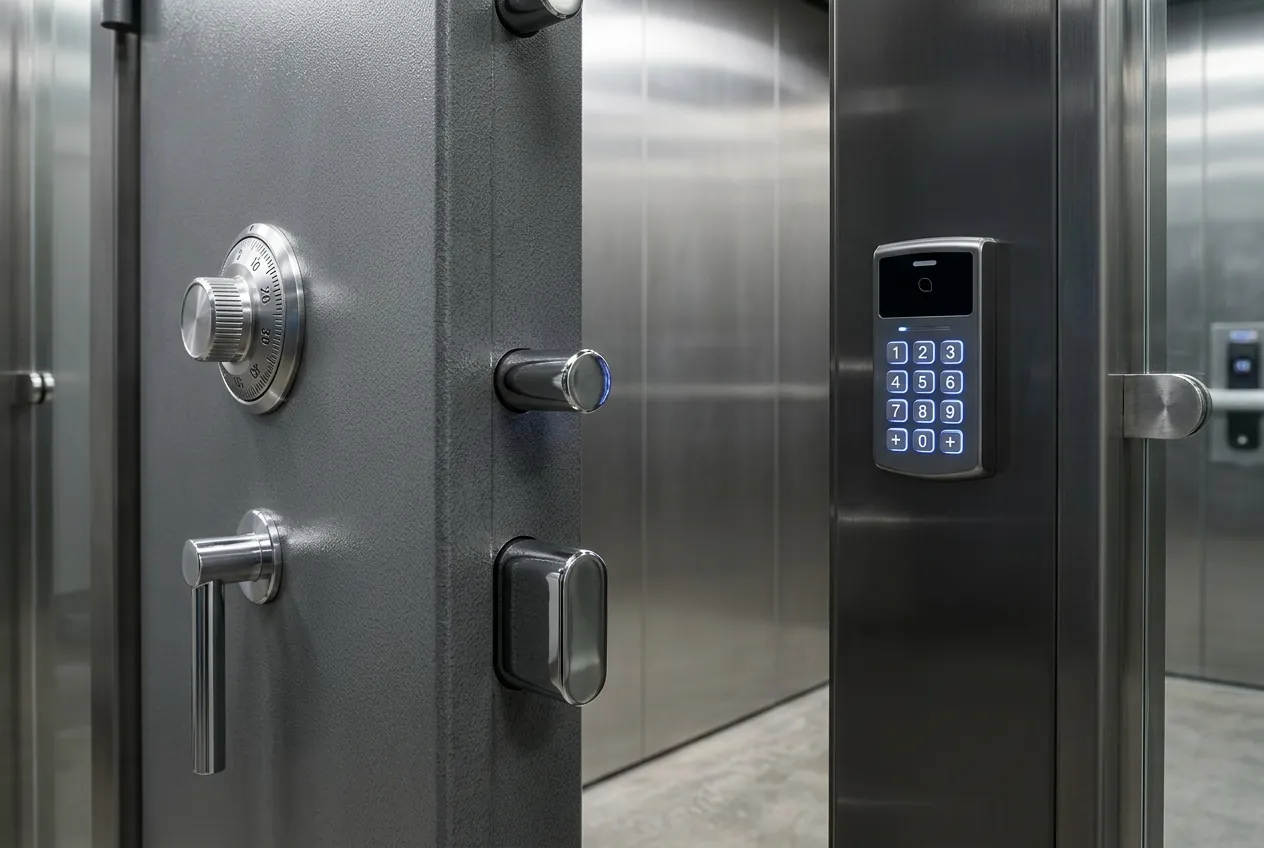
Storefronts and office suites typically use one of a few hardware families: aluminum storefront cylinders, commercial-grade mortise locksets, or interconnected lever sets on heavier doors. Each has different service and rekeying procedures, and the technician identifies what is installed before quoting the work.
Exit devices and door closers are functional safety hardware, not just convenience items, and many jurisdictions have code requirements for how they operate on doors along an exit path. A technician services these to keep them working as designed rather than disabling them.
For businesses considering electronic access, a standalone keypad or card reader on one or two doors is a smaller step than a networked system, and it is worth discussing which fits your number of doors and users before committing to hardware.
Expand any of the sections below for the detail behind a visit.
Storefront and office space in corridors like Buckhead, Midtown, and the Perimeter area ranges from older strip retail with decades-old aluminum storefront locks to newer mixed-use buildings with electronic fob access at the main entrance and traditional keyed locks on individual suites. Property managers overseeing multiple buildings across the metro often standardize on one hardware brand and keyway to make rekeying between tenants faster and to keep a manageable master key structure across sites. Light-industrial and warehouse space common in areas like Chamblee and the airport corridor typically uses heavier-duty commercial deadbolts and roll-up door hardware, which call for different tools and parts than an office suite.
On a commercial visit the technician identifies the hardware family first, since aluminum storefront cylinders, mortise locksets, and interconnected lever sets each service differently. They check whether the door closes and latches under its own closer, whether exit hardware releases cleanly, and whether any cylinder spins without engaging the bolt. For keying work they also map which doors currently share a key before proposing changes.
Have an on-site contact who can authorize the work, and know roughly how many doors are involved. If you have any existing keying records or a list of who holds which key, that speeds up master key discussions considerably. For after-hours work, confirm alarm codes and how the technician will be let in.
A few words that come up during this kind of visit, without the jargon.
Yes. For managed and multi-tenant properties the technician can coordinate with a property manager or facilities contact and confirm authorization before starting.
A technician can design a keying plan for a building so one key opens many doors while individual keys stay limited. The scope depends on the existing hardware, which the technician reviews on site.
Where the schedule allows, work can be arranged before opening or after closing. Let our team know your preferred window when you call.
Yes. Exit devices are checked and adjusted so they latch, lock, and release correctly, since this hardware affects both security and life safety on an exit path.
In many cases, yes. Property managers commonly schedule a rekey to align with move-in and move-out dates; mention your timeline when you call.
The technician can leave a summary of what was done for your records, which is useful for property files and lease turnover documentation.
That is common. The technician identifies the existing locks on site and explains the available options before any work begins.
Where the schedule allows, before-opening or after-closing work can be arranged. Mention your preferred window and any alarm or access requirements when you call.
Yes. Exit and panic hardware is serviced so it latches, locks, and releases as designed, since that hardware affects both security and safe egress.
Call and describe your situation and location, and one of our locksmiths serving your area will come out to you.