New deadbolts, reinforced strike plates, and matched hardware fitted for homes and businesses across the Atlanta area.
A deadbolt is only as strong as the door and frame around it. Installation covers cutting in a new deadbolt where there is none, replacing a worn one, and reinforcing the strike area so the bolt has something solid to seat into.
The technician checks the door thickness, the backset, and the existing prep, then fits a deadbolt of the grade you want. On exterior doors, adding a longer strike screw or a reinforced strike plate is often the most useful part of the job.
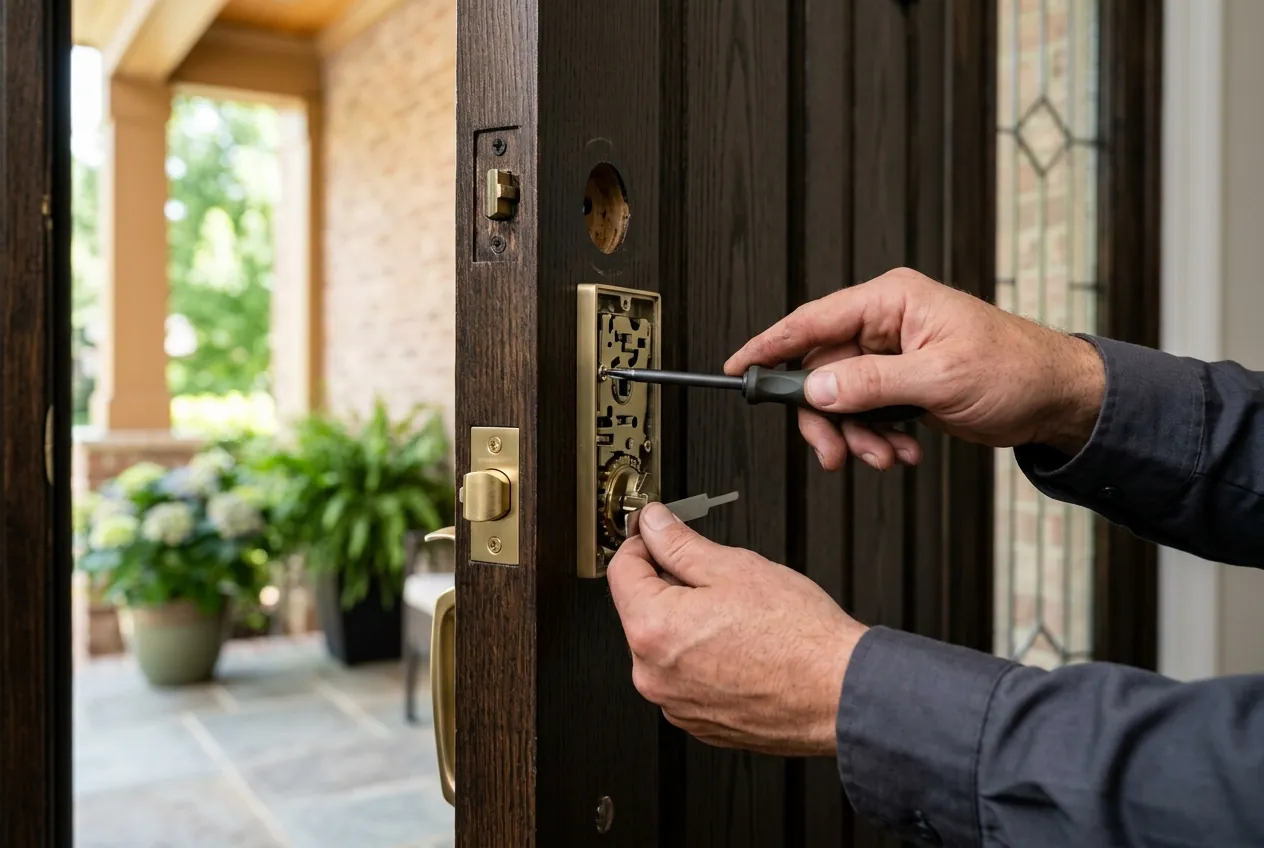
These are the situations that most often bring homeowners to ask about a new or upgraded deadbolt:
Reach our team at (866) 472-3979 and describe the lock, door, or vehicle and what is happening.
Give your address or location so we can send a locksmith working that part of the metro.
Before any work starts, the technician looks at the lock or vehicle and explains what the job involves.
Once you are clear on the scope, the technician carries out the lockout, rekey, repair, or installation.
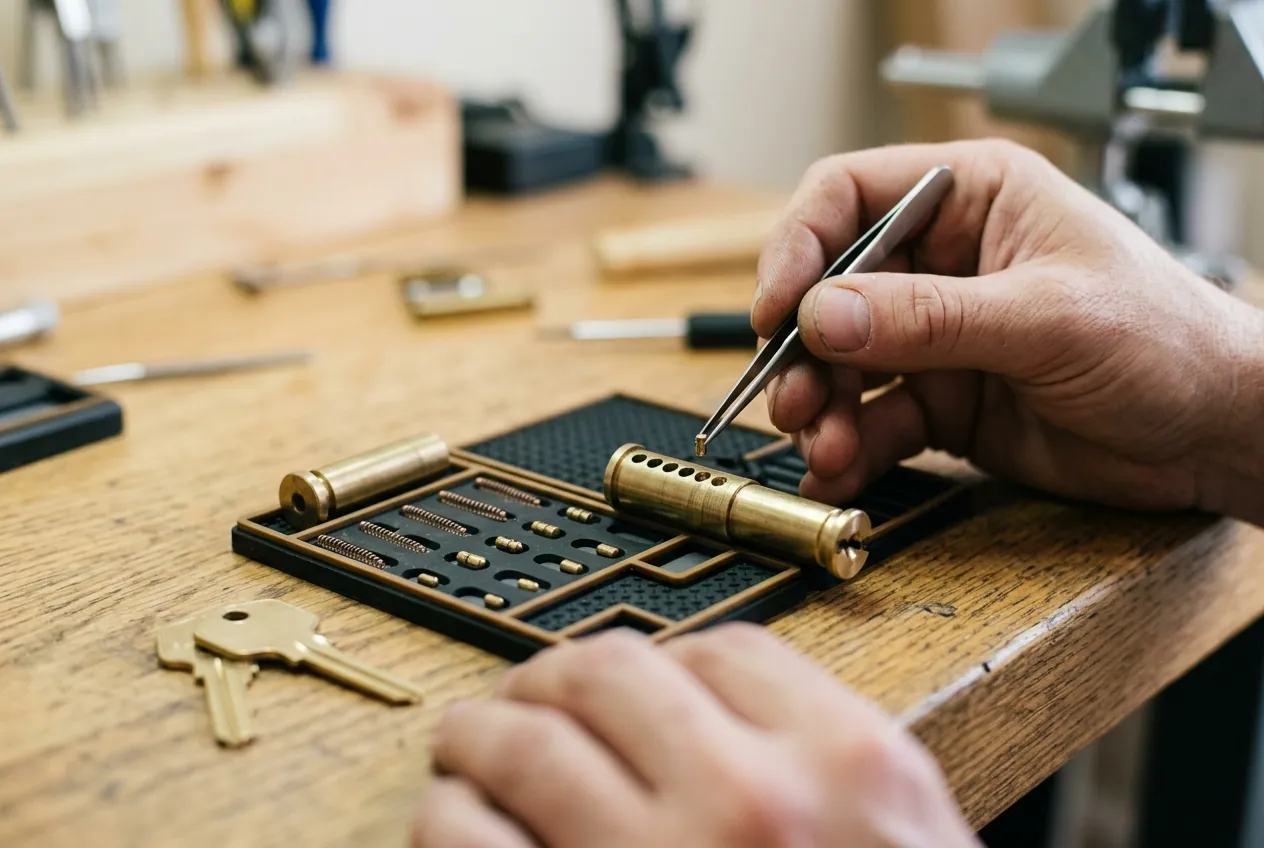
Deadbolts are sold in different security grades, which reflect how they perform under standardized testing for pick resistance, drill resistance, and forced entry. The technician can explain what separates the grades without pushing you toward the priciest option if it is not needed.
Backset, the distance from the door's edge to the center of the bolt, has to match your door prep or new prep has to be cut. Most residential doors use a standard backset, but older or imported doors sometimes vary.
The strike plate and the screws anchoring it matter as much as the deadbolt itself. A quality deadbolt with a short-screwed strike plate that only reaches the door jamb, not the framing behind it, will not perform as intended under force.
Expand any of the sections below for the detail behind a visit.
Many homes built before modern security-hardware standards became common carry deadbolts that are functional but lower grade than what is typically installed today, making this one of the more common upgrade requests on older intown housing. New-construction townhomes and infill housing near the city center are usually built to current code, which increasingly expects a security-grade deadbolt on primary entry doors as standard. For homes with a storm door or security door in addition to the primary entry, the technician can advise on how the deadbolt interacts with that outer door rather than treating them as unrelated hardware.
The technician measures door thickness and backset, checks whether existing prep can be reused, and inspects the frame around the strike, since that is where most of a deadbolt's real resistance comes from. They also check that the door has enough solid material at the lock line and whether nearby glass affects the single versus double cylinder decision.
Decide which doors you want covered and whether they should share one key. If matching existing hardware finishes matters, have a knob or lever handy for reference. Note whether any door has glass close to the lock, since that changes the recommendation.
A few words that come up during this kind of visit, without the jargon.
A double cylinder needs a key on both sides, which can be a hazard on a door people exit through and is restricted in some settings. The technician explains the trade-offs for your specific door.
Most standard exterior doors, yes. Very thin doors, some metal doors, and doors with glass close to the lock line may need a specific solution, which the technician assesses on site.
Where the new hardware is compatible with your current keyway, the technician can key it to match. Otherwise the doors can be keyed alike to a single new key.
It is a longer screw or a reinforced plate that anchors the strike into the door framing rather than just the trim. It is inexpensive relative to the deadbolt itself and worth discussing for exterior doors.
In most cases yes, though the prep and tools differ from a solid wood door. The technician assesses the specific door material before starting.
A single deadbolt on a door with existing prep is usually a short, focused job. Cutting fresh prep or reinforcing the strike adds time.
Yes, that falls under keypad and keyless entry service, and the technician can install one instead of or alongside a traditional deadbolt.
A knob or lever latch offers noticeably less resistance than a deadbolt. Most exterior doors benefit from having both.
A great deal. A quality deadbolt anchored into trim rather than framing gives up much of its advantage, which is why longer screws or a reinforced plate are often the most valuable part of the job.
Call and describe your situation and location, and one of our locksmiths serving your area will come out to you.